
EDI, in practice
Fairness is not a slogan. It is a habit of noticing where small frictions accumulate into real barriers.
My view of EDI is deliberately practical: reduce avoidable bias, make people feel welcome without asking them to translate themselves constantly, and improve the everyday structures of academic life.
Fairness
Make assessment, hiring, teaching and supervision less dependent on hidden assumptions.
Belonging
Create spaces where people do not need to constantly justify their presence.
Action
Policies matter, but so do small concrete changes: rooms, language, feedback, habits.
My own EDI experience
I care about EDI partly for ordinary academic reasons, and partly because it is not abstract to me. I have been part of the LGBT+ community for many years. I identify as gay and nonbinary, which is not a contradiction, despite the occasional administrative form doing its best to pretend otherwise.
A central part of my own view is bodily autonomy. Your body is your body. Within the bounds of informed consent and medical safety, I think people should be allowed to make their own decisions about appearance, transition, surgery, presentation, names, pronouns, and the many other ways in which a person lives in a body. In my own case, I have also made major decisions about my body, including sex reassignment surgery, in a spirit of bodily autonomy rather than because I think every identity must come with a fixed medical script.
This is why I dislike both extremes. I do not want institutions to police people into rigid categories. But I also do not think inclusion requires pretending that bodies, histories, social positions, and constraints are all the same. They are not. EDI starts from the opposite observation: people are different, and institutions often treat those differences very unevenly.
What EDI means to me
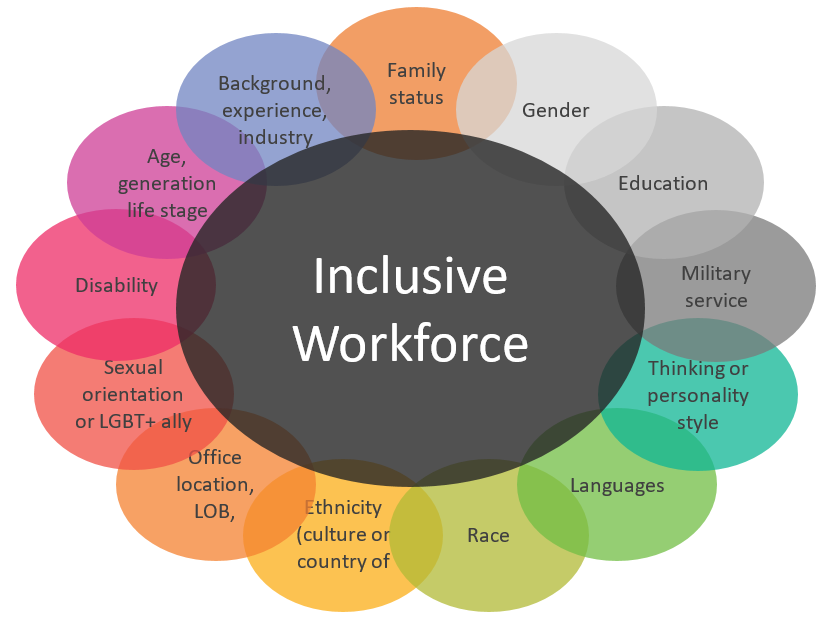
At its core, EDI means fairness. It means trying to ensure that individuals, or groups of individuals, are not treated less favorably because of characteristics that are irrelevant to the task at hand, and that people are recognized and respected enough to feel welcome and valued.
This does not mean that every difference is imaginary, or that every outcome must be forced to look the same. Humans differ biologically, socially, psychologically, economically, culturally, and historically. Some differences matter in some contexts; many do not. The hard part is to distinguish facts that are relevant from assumptions, habits and stereotypes that merely look like facts because we have repeated them often enough.
For me, EDI is therefore not a denial of difference. It is a commitment to equal treatment and equal opportunity in the presence of difference. It is also a commitment to evidence over slogans, and to individual judgment over lazy group-based assumptions.
Equal opportunity, not identical people
Because I take equal opportunity seriously, I am cautious about measures that solve one exclusion by creating another. For example, I am generally skeptical of schemes that are simply restricted to one demographic group, such as female-only fellowships, unless there is a very clear, evidence-based and narrowly justified reason for them. My preference is usually to remove barriers, broaden access, make evaluation fairer, and support people who have actually faced disadvantage, rather than replacing one crude filter by another.
That said, I also think a purely formal idea of equality can be naive. If a system has accumulated disadvantages for decades, then saying "everyone may apply" is not automatically enough. Sometimes targeted support is justified. But it should be honest about its purpose, proportionate, regularly reviewed, and designed to expand opportunity rather than to harden identity categories.
The same applies to discussions around sex, gender and sexuality. I do not think supporting LGBT+ people requires denying biology, medicine, or careful empirical research. Males and females differ in some ways, socialization matters in many ways, and individual variation is enormous. The point is not to win a slogan contest. The point is to treat people as people, not as walking averages of a population.
A real-life example
Despite a long history of progress towards EDI on campus, multiple forms of inequality, discrimination and exclusion still shape academic life. In universities this often happens subtly, through habits, expectations and biases rather than through explicit hostility.
The point I want to make is related to biases:
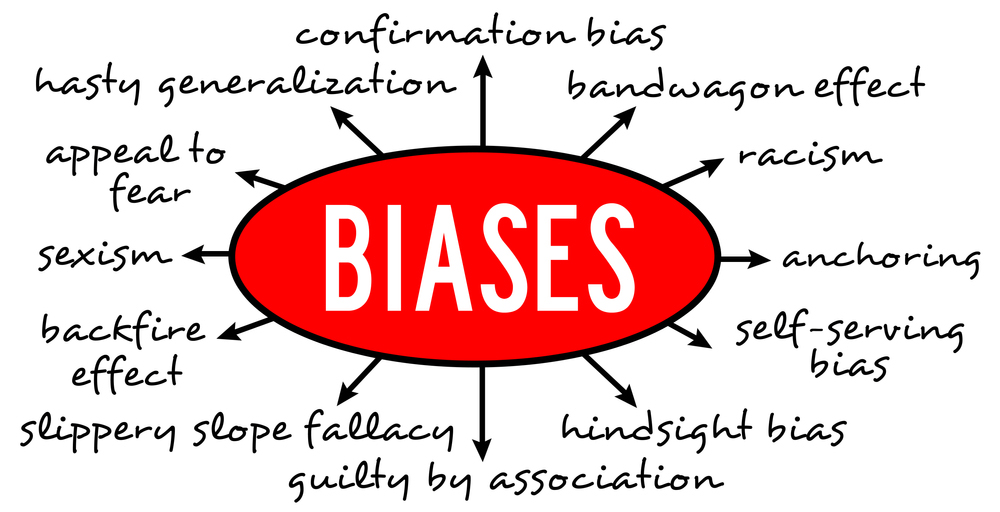
A concrete example from my own teaching made this very clear to me. In an oral exam for my Algebraic Topology class in 2021, one student had a stutter. Immediately after the exam I wrote down 35/50 points. Before finalizing the marks, I wondered whether I had treated the student fairly. I rewatched the recording of the exam and realized that I had not. The mathematics was better than my first mark reflected, so I changed the mark to 40/50.
That may sound like a small correction. But imagine being the student. If similar small biases happen repeatedly, across exams, interviews, tutorials and recommendations, they do not remain small. They accumulate into a very real barrier.
What I can do, and what I have tried to do
Some important improvements are not intellectually difficult. Someone just needs to push a little. Gender-neutral bathrooms are a good example: cheap, practical, and important for many people. During a previous position I mentioned this several times in faculty meetings. Eventually the department had one. This is a good model for part of my EDI philosophy: sometimes the useful thing is not a grand theory, but being constructively annoying until an obvious problem is fixed.
Here are some concrete habits I try to support:
- Question my own assumptions, especially when evaluating students, applicants and colleagues.
- Use evidence when possible: recordings, written criteria, transparent rubrics, second checks, and structured comparison.
- Make ordinary academic spaces easier to enter: clear expectations, accessible materials, respectful language, and fewer unnecessary gatekeeping rituals.
- Support students and colleagues as individuals, rather than treating group membership as a complete explanation of who someone is.
- Keep EDI practical: bathrooms, names, pronouns, assessment design, supervision habits, event accessibility, and fair processes matter.
Questions I think institutions should ask
Good intentions are not enough. Institutions should ask people what actually happens to them, and then be willing to hear inconvenient answers. Useful questions include:
- Do you feel comfortable being yourself at work or study?
- Are there aspects of yourself you feel you need to hide in academic settings?
- Where do our evaluation systems rely too much on informal networks, confidence, polish or cultural familiarity?
- What barriers are easy to remove, but still somehow remain?
- Which EDI initiatives actually help, and which ones mostly produce paperwork?
Conclusion
My EDI position is simple, but not simplistic. I believe in bodily autonomy, equal dignity, equal opportunity, and fair treatment. I do not believe that equality requires pretending that everyone is the same, and I do not think good intentions excuse bad evidence. I also do not think "facts over feelings" should be used as a license to be careless about how people are treated. Facts matter; so do people.
Universities should be places where difficult ideas can be discussed honestly, and where people are not pushed out by avoidable frictions unrelated to their ability, curiosity or work. That is the standard I try to hold myself to. Imperfectly, of course. But trying is better than decorating the website with nice words and doing nothing.